Follow our Telegram channel to get notified instantly whenever new books are published.

Byzantine Soldier Vs Seljuk Warrior – Si Sheppard
Total Downloads:
26
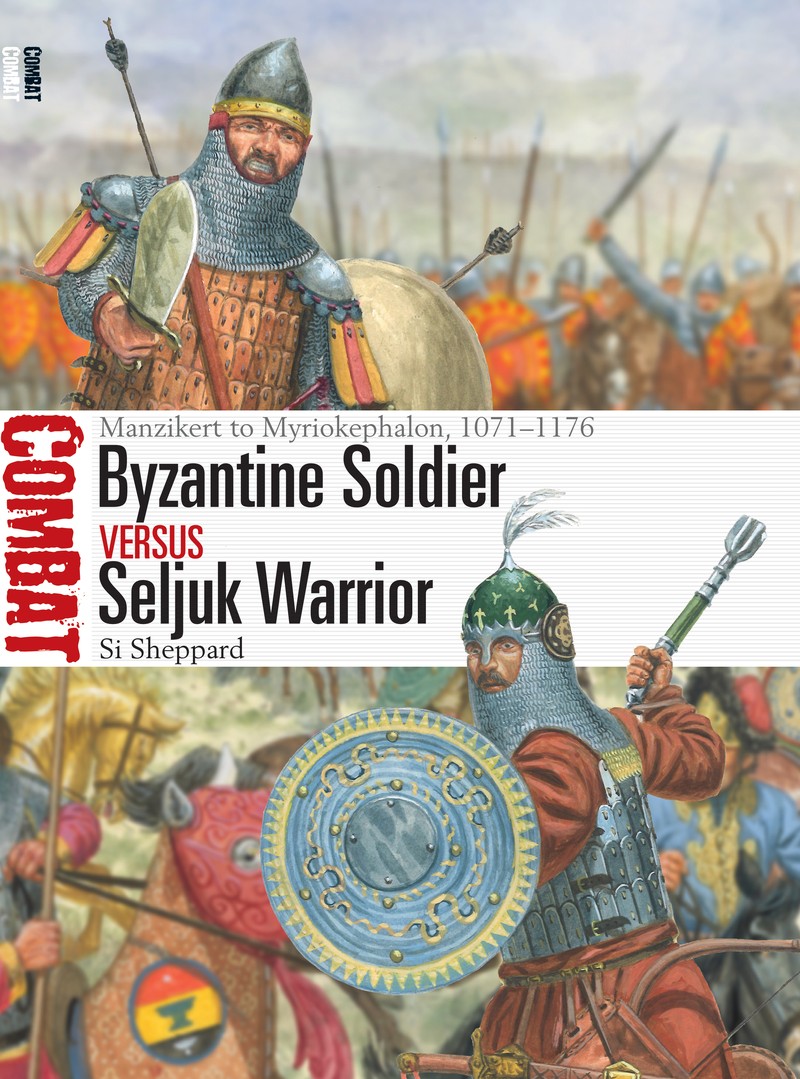
Pushed to the brink of annihilation during the 6th and 7th centuries, the Byzantine Empire survived by reorganizing its sole remaining substantive mass of contiguous territory, Anatolia, into self-sufficient themata (regional units), while maintaining a defensive line along the Taurus Mountains. During the 9th and 10th centuries, a succession of aggressive emperors was able to take advantage of the Abbasid caliphate as it lost control of its frontier territories.
During the reign of Emperor Basil II Porphyrogenitos (r. 976–1025) Byzantine forces brutally crushed the Bulgar Empire in the Balkans, while in the east his aegis now stretched from Armenia in the north to Antioch in the south. While the accession of manpower and revenue from these territories was a net benefit, the advance from the Taurus Mountains left the empire dangerously overextended. The new frontier in the East, which ran roughly Byzantine horsemen engage their Seljuk counterparts in this illustration from the Madrid Skylitzes, a 12th-century illuminated manuscript version of the Synopsis of Histories by John Skylitzes, which recounts the reigns of the Byzantine emperors from the death of Emperor Nikephoros I (r.
802–11) to the abdication of Emperor Michael VI Bringas on 30 August 1057. This representation is highly stylized, but does reflect the difference between heavy and light horse and emphasizes the close formation necessary to deliver the full impact of a cavalry charge. (Werner Forman/Universal Images Group/Getty Images) 4 The apotheosis of Emperor Basil II, as depicted in this frontispiece of a psalter in the collection of the Biblioteca Nazionale Marciana, Venice. He is depicted being crowned by Christ, flanked by angels and warrior saints, and trampling over the prostrate forms of his subjugated Bulgar adversaries, now reduced to grovelling, abject submission.
While Basil never neglected the Byzantine Empire’s eastern frontier, campaigning against the Khazars and Georgians in the Caucasus and twice against the Fatimids in Syria, it was his remorseless series of campaigns against the Bulgars in the Balkans that dominated his reign.
This is a short excerpt from the opening of “” by Unknown, quoted for review and introduction purposes. All rights belong to the copyright holders.
Book Information
- Unique ID: 07e2e23a366fa738
- File Extension: .pdf
- File Size: 119,541,138 bytes (114.003 MB)
- Title: –
- Author: Unknown
- Pages: 82
- Language: English (en)
Reading & Word Statistics
- Estimated Reading Time: 177.69 minutes
- Total Words: 35,539
- Total Characters: 228,999
- Average Words per Page: 433.4
- Average Characters per Page: 2792.67
Most Frequent Words
byzantine (226), seljuk (179), army (134), imperial (126), emperor (122), manuel (86), arslan (85), turks (84), alexios (84), romanos (75), seljuks (72), sultan (71), manzikert (67), anatolia (65), against (60), battle (59), komnenos (59), military (57), back (54), one (53), empire (50), turkish (49), left (48), john (48), cavalry (46), constantinople (46), alp (46), authority (43), enemy (42), lake (42), pass (42), campaign (41), kilij (41), east (39), first (39), now (38), units (38), frontier (38), two (38), doukas (37), camp (37), command (36), city (36), march (36), andronikos (36), force (35), second (34), however (33), day (33), line (32), troops (32), west (32), century (32), right (32), along (31), between (31), even (30), men (30), way (30), territory (29), new (29), formation (29), nicaea (29), iconium (29), order (29), also (29), byzantines (28), infantry (28), arrows (28), myriokephalon (27), philomelion (27), south (27), still (27), great (27), made (27), following (27), divisions (27), antioch (26), river (26), major (26), himself (26), son (26), took (26), archers (26), courtesy (26), north (25), michael (25), horse (25), throne (25), long (25), centre (25), division (25), field (25), baggage (25), heavy (24), including (24), another (24), far (24), mercenaries (24), train (24).