Follow our Telegram channel to get notified instantly whenever new books are published.

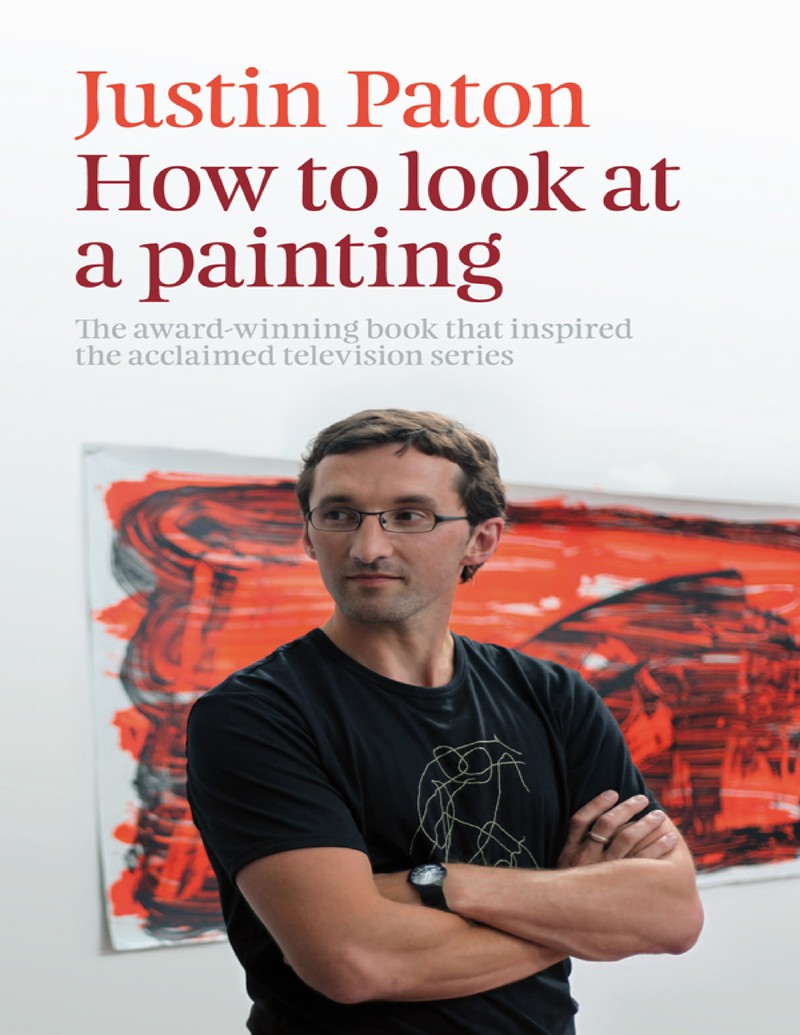
How To Look At A Painting – Justin Paton (1)
Total Downloads:
21
I took my first trip there from the comfort of a small flat near Caroline Bay in Timaru, New Zealand, using the red plastic Viewmaster I got for my fourth birthday and the ‘wonders of the world’ reel that came with it. I would slot the notched white disc into the device, face a nearby window or light, and peer in at the first picture. The planet Earth hovered in space, under the title ‘The blue planet’. Each pull of the lever brought another wonder of the world into stereoscopic view.
Click, Parthenon. Click, Niagara Falls. I made a habit of holding the Viewmaster slightly away when ‘The terrors of the deep’ arrived, a great white shark so three-dimensional it might have swum right into my eye. And in among the ruins and marvels was, of course, Venice – glorious, flaking, putty-coloured, and up to its knees in water. Like other people who live in the so-called provinces of the planet, New Zealanders wishing to look at paintings eventually come up against the fact that so many of them are somewhere over there.
Back when I studied art history (not all that long ago), I’d sit with other students in front of a clattery, overheating slide-viewer and rote-learn the art histories of Paris, New York, London and so on. New Zealand made it on to the map for only one course in the final year.
The gap between there and here was huge, and if you were less than impressed by what you saw on screen, well, who were you to demur? You could hardly take a bus to the Louvre and check for yourself. As Robert Hughes has written of his experience as a young artist and critic in Australia in the 1960s, ‘there is no tyranny like the tyranny of the unseen masterpiece’.
To overcome it, or rather to get over it, one has to become one of those things we are always seeing but never quite admitting to being: a tourist. So let’s go to Venice. When well-to-do English travellers took their grand tours of Europe in the eighteenth century, many packed a small dark mirror called a Claude glass in which to view promising bits of country.
Named after landscape painter Claude Lorrain and his idealised, amber-hued land scapes, the glass was a way to test whether the world measured up to painting, and to cast it (literally) in a more picturesque, Claude-like light. Venice, however, is one of those places that needs no such assistance. The city’s daily purpose is to look more like Venice than Venice.
THE BEST THINGS always happened in the art room. Way up at the end of the hallway, with stencilled wallpaper and a plaster ceiling that set it apart from the rest of the house, it was one of those rooms that had been designed to be used only ‘for company’ and had ended up being used hardly at all. The company always liked it better at the other end of the house, where the fire was going and the kitchen was handy.
By the time I was old enough to notice it, the room had turned into a kind of warehouse for all the objects no one could find a use for, but couldn’t quite bring themselves to throw out. There were pottery gnomes, unused beach towels, a prickly sofa bed.
There was a trunk that contained photos, internment camp diaries, and a World War I issue knuckleduster. There was a carpet square positioned to hide the chipboard patch that marked the spot where, thrillingly one summer, someone had stepped right through the borer-chewed floorboards. There was a china cabinet through whose windows you could see yellowing strata of the Auckland Weekly News, an ageing pottle of (remember this?) ‘Slime with Worms’, a bag of stringy Christmas tinsel, and a black tin box full of keys.
But what made the room were the paintings. We called it the art room because paintings covered the walls from ceiling to floor. Somewhere in the midst of running a dairy farm, raising a family and coaxing a colossal flower garden into a yearly outburst of colour, my grandmother, Phyllis ‘Paddy’ Nash, had taken up painting.
A latecomer, starting in her sixties, she was untrained and, I guess, pretty close to being what those in the professional art world like to call an ‘outsider’ or (awful phrase) ‘innocent eye’. That’s just a snooty way of saying she painted the things she liked, and did so for no grander reason than that she wanted to enjoy them all over again. As a gardener, the things she liked most were flowers. The walls were a blooming barrage of hydrangeas, fuchsias, big floppy magnolia blossoms.
The effect might have been oversweet, had she not had an equally strong taste for the gruesome, the lumpen and the all-out silly. Turnips and old sneakers received the same attention as jasmine and winter roses. One of her showpieces depicted a ‘beaut big rat’ (her words) caught in a trap. And her rendition of a pair of holed-out underpants blowing on a clothes-line was reportedly the cause of frowning debate among the selectors at the local art society.
This is a short excerpt from the opening of “” by Unknown, quoted for review and introduction purposes. All rights belong to the copyright holders.
Book Information
- Unique ID: ca945e71defc6192
- File Extension: .pdf
- File Size: 1,108,665 bytes (1.057 MB)
- Title: –
- Author: Unknown
- Pages: 93
- Language: English (en)
Reading & Word Statistics
- Estimated Reading Time: 134.81 minutes
- Total Words: 26,962
- Total Characters: 155,653
- Average Words per Page: 289.91
- Average Characters per Page: 1673.69
Most Frequent Words
painting (222), art (162), paintings (147), one (137), like (104), new (89), work (74), look (72), it’s (67), time (64), gallery (62), world (58), way (55), see (52), looking (49), back (48), room (45), big (45), artist (43), paint (41), view (39), made (38), first (38), book (38), things (37), painted (36), com (35), something (35), museum (34), also (34), now (33), even (33), oceanofpdf (33), colour (32), still (32), day (32), right (31), life (31), there’s (31), show (31), painter (31), many (30), thing (30), every (30), john (30), often (29), find (28), place (28), people (28), called (27), long (27), small (27), century (27), always (26), never (26), white (26), zealand (26), make (26), years (26), good (25), kind (24), someone (24), eyes (24), two (24), venice (24), get (23), say (23), painters (22), without (22), paton (22), galleries (22), know (22), artists (21), said (21), don’t (21), story (21), great (21), going (20), little (20), space (20), perhaps (20), looked (20), seen (20), bit (20), need (20), you’re (20), close (19), feel (19), want (19), portrait (19), surface (19), best (18), end (18), walls (18), between (18), today (18), away (18), much (18), come (18), thought (18).