Follow our Telegram channel to get notified instantly whenever new books are published.

Job Architecture PDF – Ben Zweig
Total Downloads:
7
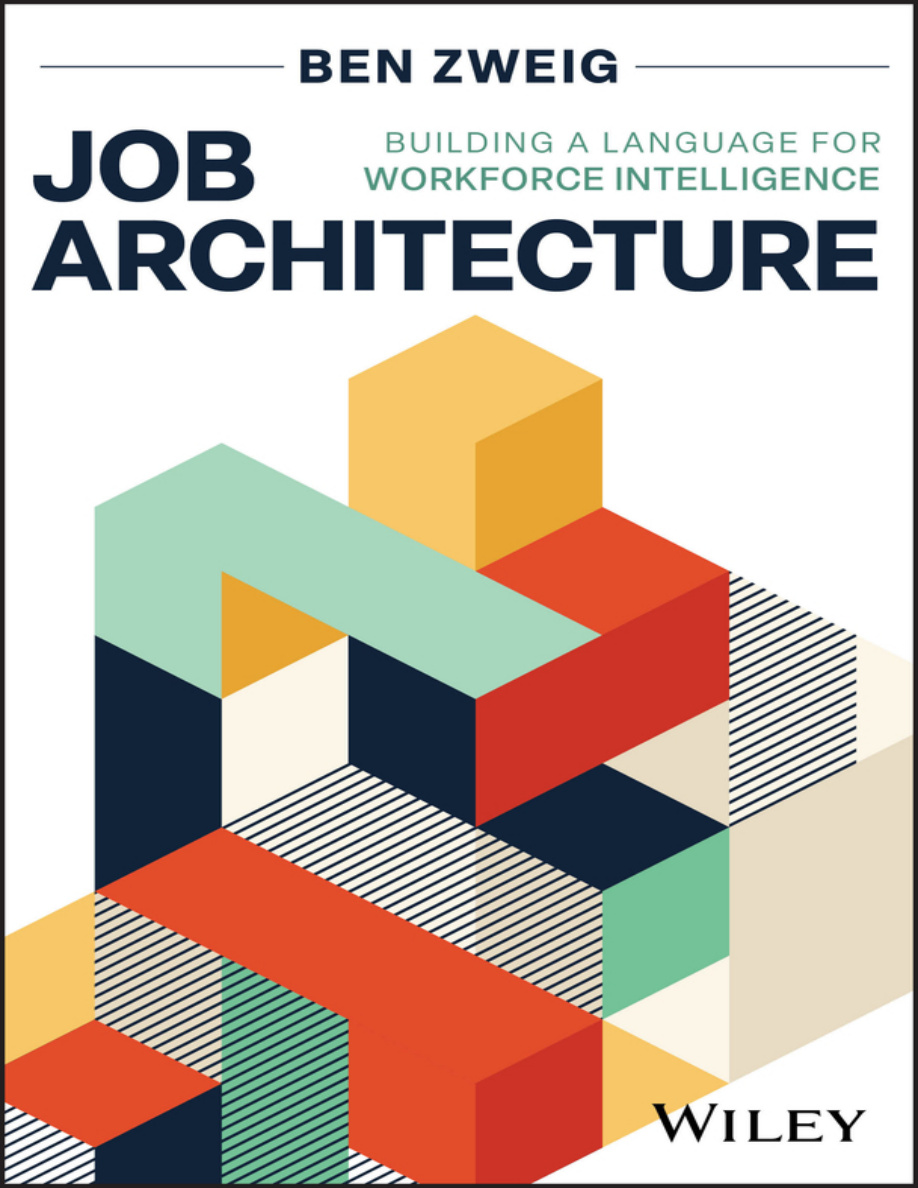
Job Architecture Book Summary & Review
Quick Summary
A definitive guide to organizational design, explaining how to map out role levels, titles, and career pathways systematically to enable scaling.
Book Topic and Premise
Title inflation, unclear promotion criteria, and disconnected compensation structures cost growing enterprises millions in employee turnover annually. This data-driven human resource manual tackles these organizational structural flaws directly, offering a precise method for mapping workforce roles. Zweig avoids generic leadership slogans, focusing entirely on operational design metrics.
Reading the Job Architecture by Ben Zweig PDF version introduces executives to clean leveling matrices and global standardization frameworks. The guide tracks how to group varied department functions into clear title tracks that match international market realities. The text uses actual case studies from major corporate restructurings to show how unclear job boundaries breed structural inefficiency.
Every chapter reads like a clear technical manual, focusing on workforce alignment metrics rather than abstract management psychology. The author’s primary goal is to build clear career pathways that protect retention. For human resource managers looking to deploy equitable salary bands and standard titles during high-growth phases, this reading path provides an essential, scalable roadmap.
Detailed Plot & Summary
Zweig provides human resource professionals and executives with a metric-driven manual for corporate alignment. The text details how to eliminate title inflation, structure objective leveling frameworks, sync compensation bands, and reduce workforce friction during rapid scaling phases.
✍️ Editor’s Note: An essential, data-driven blueprint for corporate scaling that cuts through vague management slogans to deliver precise workforce algorithms.
Critical Review and Analysis
The operational templates, leveling matrices, and data models are exceptionally valuable for HR professionals. On the critical side, the text is dry, analytical, and reads like a corporate handbook, which will alienate general leadership audiences looking for light inspiration.
Main Themes & Motifs
- Workforce Leveling
- Title Standardization
- Compensation Banding
- Corporate Scalability
Who Should Read This Book?
Human resource executives, chief operating officers, corporate scaling consultants, and compensation analysts.
Why You Should Read It
It replaces vague management theories with concrete, quantitative templates for cataloging and mapping internal corporate roles.
Key Takeaways & What You Will Learn
You will master role evaluation methodologies, how to design corporate title matrices, and strategies for correcting internal pay inequalities.
Technical & Bibliographic Details
| 📖 Title: | Job Architecture |
| 🔍 Original Title: | Job Architecture: Structuring Organizations for Scale and Clarity |
| ✍️ Author: | Ben Zweig |
| 🏢 Publisher: | Zweig Corporate Press |
| 📅 Publication Year: | 2022 |
| ⏳ First Published: | 2022 |
| 🔢 ISBN: | 9781954124004 |
| 📦 Amazon ASIN: | B09M5K7L12 |
| 📄 Total Pages: | 224 |
| 📁 Category: | Business, Productivity, English |
| 🌍 Language: | English |
| ⭐ Goodreads Rating: | 4.15 / 5.0 (112 votes) |
| ⏱️ Reading Time: | 4 hours |
| 📊 Difficulty Level: | Advanced |
| 📚 Similar Books: | Organizational Design by Richard M. Burton, Scaling Up by Verne Harnish |
Frequently Asked Questions (FAQ)
❓ Does this book contain pre-built human resource templates?
Yes, the text features practical leveling matrices, role description rubrics, and organizational charts that can be adapted for corporate use.
❓ What company size is this corporate methodology intended for?
The strategies target mid-size enterprises transitioning to large scale, though startup founders can use it to build early structures safely.
❓ Is the core focus on psychological motivation or operational structure?
The focus is strictly operational and quantitative, mapping out the architecture of titles, leveling, and data alignment fields.
❓ How does the text handle global remote workforce scaling?
Zweig includes dedicated sections on standardizing titles across international boundaries and aligning localization adjustments within compensation bands.
❓ Can this reference manual help fix active title inflation?
Yes, it provides a specific, step-by-step audit framework for reducing redundant management tiers and reorganizing broken workforce structures.
❓ What is the primary background of the author Ben Zweig?
Zweig serves as a labor economist and corporate data analyst, bringing extensive data-backed metrics to HR organizational strategy.
📚 Recommended Category: Explore more in our Business hub.