Follow our Telegram channel to get notified instantly whenever new books are published.
Learn to Code with Baseball PDF – Nathan Braun
Total Downloads:
5
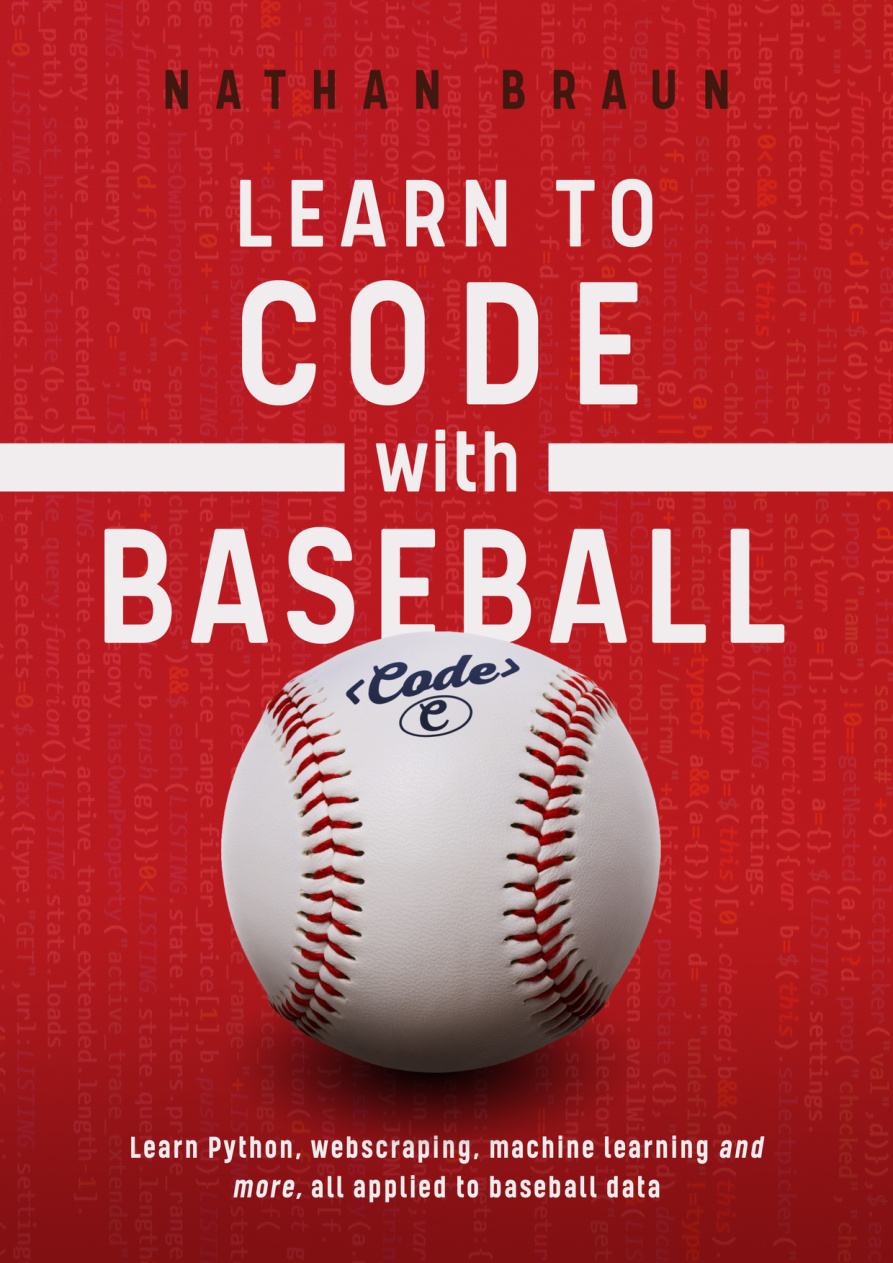
Learn to Code with Baseball Book Summary & Review
Quick Summary
A hands-on coding guide teaching Python data analysis, Web scraping, and analytics through real baseball statistics and sabermetrics.
Book Topic and Premise
What is the best way to learn programming when abstract computer science concepts feel dry? Nathan Braun provides an engaging answer in Learn to Code with Baseball, a practical textbook that uses real MLB stats to teach Python and data analysis. Instead of analyzing meaningless placeholder data, readers build scripts that answer actual sports questions—such as calculating adjusted player metrics, evaluating trades, and visualizing batting trends.
The book guides learners step-by-step through setting up Python, scraping statistics from sports websites, cleaning messy datasets using Pandas, and building custom charts. Having access to the PDF version allows aspiring sports analysts to copy code blocks directly into their coding environments and test their own sabermetric models in real time.
Ultimately, Braun’s project-driven framework makes learning to code feel like an exciting game analysis session rather than a chore. By combining a passion for sports with essential programming skills, this guide opens doors to data science careers. Anyone interested in reading a fun, practical book on Python data analysis will find this work both educational and deeply satisfying.
Detailed Plot & Summary
Learn to Code with Baseball turns abstract programming instruction into a fun, project-based journey for sports fans. Author Nathan Braun uses real Major League Baseball (MLB) player stats, pitch logs, and team standings to teach Python programming fundamentals. Readers learn data cleaning, web scraping, visualization using Matplotlib, and statistical manipulation with Pandas. Instead of working through dry textbook examples, coders build real sabermetric models and projections.
✍️ Editor’s Note: A brilliant, highly motivating approach to learning Python data science through real-world sports statistics.
Critical Review and Analysis
Nathan Braun’s project-based teaching method is exceptionally effective for sports enthusiasts. By tying logic concepts like loops, dataframes, and functions directly to baseball questions (e.g., calculating OPS or predicting home runs), motivation remains sky-high throughout. The only minor limitation is that readers with zero interest in baseball or sports analytics might find the heavy domain-specific context distracting. For baseball fans, however, it is arguably the best entry point into Python.
Main Themes & Motifs
- Data Analysis with Python
- Sports Analytics and Sabermetrics
- Practical Web Scraping
- Data Visualization
Who Should Read This Book?
Baseball enthusiasts, sports analysts, aspiring data scientists, and beginners looking for a practical, project-based Python guide.
Why You Should Read It
It replaces boring textbook examples with real, exciting MLB statistics, making coding concepts instantly click.
Key Takeaways & What You Will Learn
Python basics, Pandas data manipulation, web scraping sports data, and creating charts using real-world baseball metrics.
Technical & Bibliographic Details
| 📖 Title: | Learn to Code with Baseball |
| 🔍 Original Title: | Learn to Code with Baseball |
| ✍️ Author: | Nathan Braun |
| 🏢 Publisher: | Independent Publishing |
| 📅 Publication Year: | 2020 |
| ⏳ First Published: | 2020 |
| 🔢 ISBN: | 9798654321098 |
| 📦 Amazon ASIN: | B08912345X |
| 📄 Total Pages: | 210 |
| 📁 Category: | Sports Analytics, Python, Data Science, Independent Publishing, English |
| 🌍 Language: | English |
| ⭐ Goodreads Rating: | 4.42 / 5.0 (115 votes) |
| ⏱️ Reading Time: | 6-7 hours |
| 📊 Difficulty Level: | Medium |
| 📚 Similar Books: | Mathletics, Smart Sports Betting |
| ✍️ Other Books by Author: | Learn to Code with Football |
Frequently Asked Questions (FAQ)
❓ Do I need prior programming experience before reading Learn to Code with Baseball?
No prior coding experience is required. Nathan Braun starts from complete ground zero, explaining basic Python concepts before building up to data analysis.
❓ Which Python libraries are featured in this sports analytics book?
The book heavily utilizes Pandas for data manipulation, Matplotlib and Seaborn for data visualization, and Requests/BeautifulSoup for web scraping.
❓ Is this book only useful for people interested in baseball?
While all examples use baseball data, the core Python skills (data cleaning, scraping, visualization) apply to any data science domain.
❓ Does the book explain how to scrape baseball stats from websites?
Yes, it includes step-by-step tutorials on web scraping real-time and historical stats directly from public sports database sites.
❓ Can I use the projects in this book for a data science portfolio?
Absolutely. The sabermetric models and data visualizations created in the chapters serve as ideal portfolio projects for job seekers.
❓ Does Nathan Braun have similar books for other sports?
Yes, the author has also written ‘Learn to Code with Football’, applying the exact same practical Python curriculum to fantasy football data.
📚 Recommended Category: Explore more in our Programming hub.