Paylaşılan kitaplardan anında haberdar olmak için kanallarımızı takip edebilirsiniz:

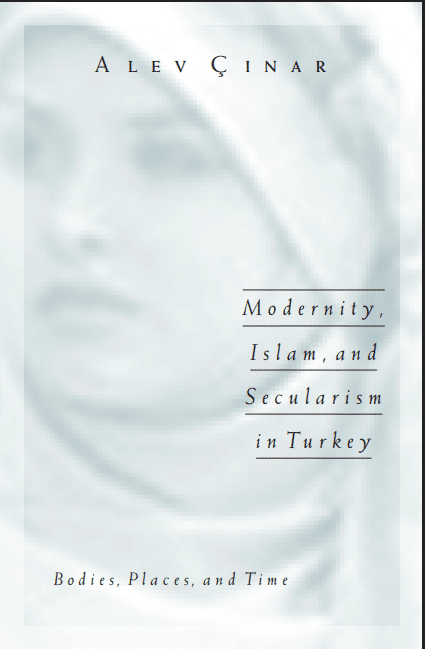
Modernity, Islam and Secularism in Turkey PDF | Alev Çınar
İndirme: 11
PDF Book Information
Book Title: Modernity, Islam and Secularism in Turkey
Author: Alev Çınar
Category: Sociology / Political Science
Language: English
File Type: PDF
Telegram : https://t.me/birkitap1
Book Description
Modernity, Islam and Secularism in Turkey by Alev Çınar is a deeply analytical and thought-provoking work that explores the complex relationship between modernization, religious identity, and secular political structures in Turkey. Rather than presenting these concepts as fixed or opposing categories, the book examines how modernity, Islam, and secularism have been continuously redefined through political discourse, cultural practices, and everyday life. Alev Çınar approaches the subject not as a simple conflict between tradition and progress, but as an evolving negotiation shaped by historical experiences and social transformations.
The book places particular emphasis on how secularism in Turkey has functioned not merely as a legal or constitutional principle, but as a cultural project that seeks to shape public space, citizenship, and national identity. Çınar argues that secularism in Turkey has been actively constructed through symbols, narratives, and power relations, rather than simply imposed through institutions. This perspective allows the reader to understand why debates around religion and politics remain so intense and unresolved in Turkish society.
At the same time, the book challenges common assumptions about Islam as inherently incompatible with modernity. By examining political movements, public rituals, and ideological discourses, Çınar demonstrates how Islamic identities have adapted to modern frameworks and, in some cases, have themselves become agents of modernity. This nuanced approach avoids simplistic binaries and instead highlights the fluid boundaries between religious expression and secular governance.
Written in a clear yet academically rigorous style, Modernity, Islam and Secularism in Turkey is suitable for readers interested in sociology, political theory, Middle Eastern studies, and modern Turkish history. The book does not merely describe political developments; it critically interrogates the meanings attributed to concepts such as progress, tradition, and secular public life. As a result, it offers valuable insights not only into Turkey, but also into broader global discussions about religion and modernity.
Book Summary (Contains Spoilers)
The book begins by outlining the historical foundations of Turkish modernity, tracing its roots back to late Ottoman reforms and the establishment of the Republic. Çınar explains how modernization was framed as a civilizational project aimed at aligning Turkey with Western norms, often positioning religion as something that needed to be controlled or confined to the private sphere. This early framing of secularism laid the groundwork for future tensions between the state and religious communities.
In the following sections, the author examines how secularism became embedded in public spaces, state rituals, and everyday practices. From clothing regulations to urban planning and education, secularism is shown to operate as a visible and symbolic force. Çınar emphasizes that these practices were not neutral, but actively shaped who could appear in public and how citizens were expected to perform modern identities.
A central part of the book focuses on the rise of Islamic political movements and their challenge to the dominant secular narrative. Rather than portraying these movements as anti-modern, Çınar analyzes how they adopted modern organizational structures, media strategies, and political language. This section reveals a paradox: Islamic movements often criticized secularism while simultaneously operating within the very modern frameworks that secularism had created.
The book also explores moments of crisis, such as political interventions and cultural conflicts, to show how debates over Islam and secularism intensified during periods of social change. These moments are used to illustrate how modernity in Turkey has never been a stable or uncontested process. Instead, it has been continuously reshaped by competing visions of identity, morality, and public life.
In its concluding chapters, Modernity, Islam and Secularism in Turkey argues that the Turkish experience cannot be understood through rigid categories. Çınar suggests that modernity itself is not a single path, but a field of struggle where different actors negotiate meaning and power. The book ultimately leaves the reader with a more complex and layered understanding of how religion and secularism coexist, conflict, and transform one another within a modern society.
Why Should You Read This Book
This book is essential for readers who want to move beyond simplistic explanations of Turkish politics and society. It offers a sophisticated framework for understanding how modernity and religion interact, making it especially valuable for students, researchers, and intellectually curious readers interested in comparative secularism and political identity.
Reader Reviews
A highly insightful analysis that challenges common assumptions about secularism.
The book offers a fresh perspective on Islam and modern political life.
Dense at times, but extremely rewarding for careful readers.
One of the most nuanced studies of Turkish secularism I have read.
Combines theory and real-world examples very effectively.
Helps explain why religion remains central to Turkish political debates.
An essential read for anyone studying modern Turkey.
FAQ
Is this book academic in nature?
Yes, it is an academic work, but it is written in a clear and accessible style.
Does the book focus only on politics?
No, it also examines culture, public space, and everyday social practices.
Is prior knowledge of Turkish history required?
Basic knowledge is helpful, but the book provides enough context for new readers.
Does the author take a political stance?
The book is analytical rather than partisan, focusing on interpretation rather than advocacy.
Is the book relevant today?
Yes, its themes remain highly relevant to current debates on religion and secularism.
Is this book suitable for sociology students?
Absolutely, it is widely relevant to sociology, political science, and cultural studies.
Can this book be read in digital format?
Yes, it is available as a PDF and suitable for digital reading.
Modernity, Islam and Secularism in Turkey PDF Download Link
This book is available as a PDF and can be read comfortably on digital devices.
Kitabı Hemen Okumaya Başla
PDF yükleniyor...