Follow our Telegram channel to get notified instantly whenever new books are published.

Fredric Jameson and Film Theory PDF – Keith B. Wagner
Total Downloads:
6
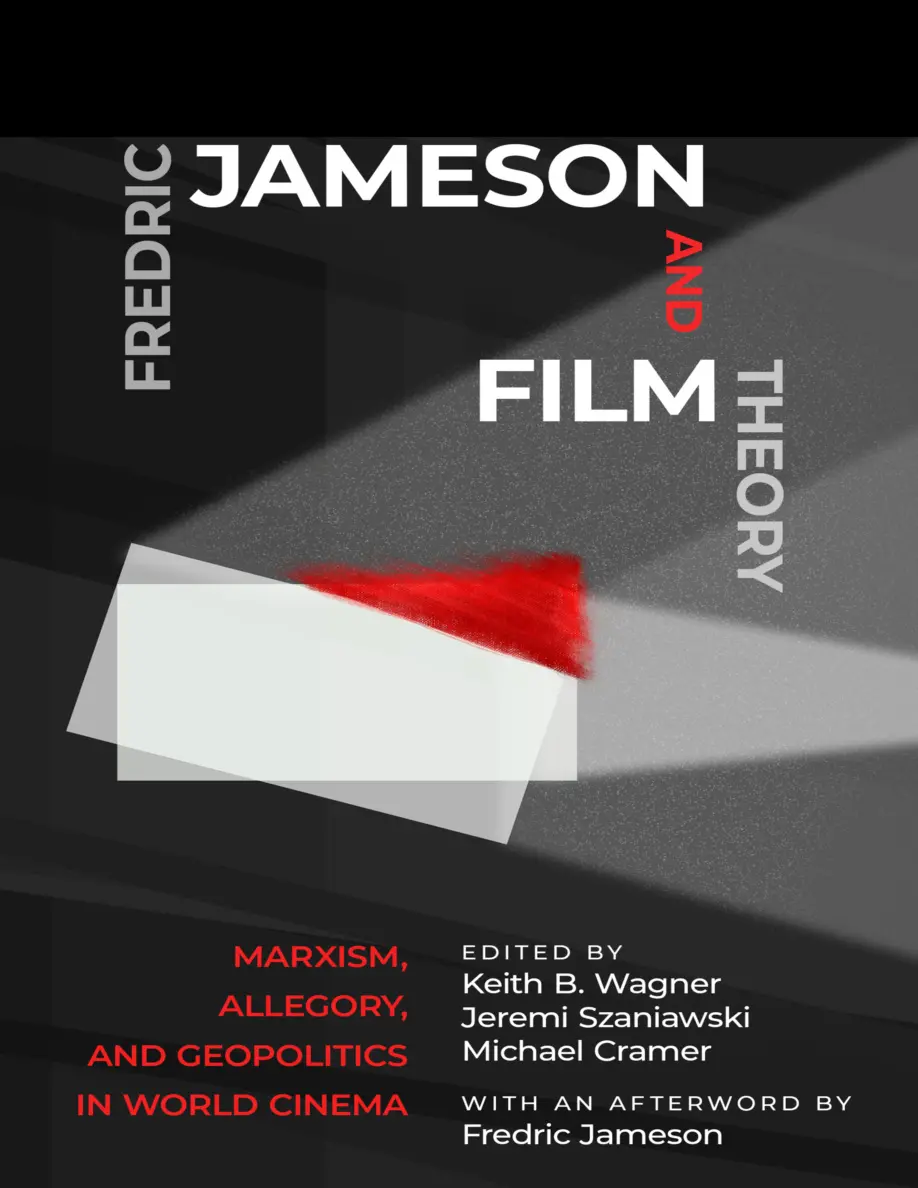
Fredric Jameson and Film Theory Book Summary & Review
Quick Summary
A critical, academic compilation analyzing how Marxist philosopher Fredric Jameson’s theories of late capitalism explain the structural evolution of global film narrative.
Book Topic and Premise
How do the economic realities of globalized late capitalism dictate the formal aesthetic structures of the movies we consume? In Fredric Jameson and Film Theory, academic media scholar Keith B. Wagner, alongside co-editors, structures a comprehensive, materialist framework for analyzing global cinema through the philosophical lens of Fredric Jameson. The volume argues that film is never a detached art form, but a cultural product whose narrative logic directly reflects the shifting anxieties of international capitalist expansion.
The scholarly text moves systematically through key Jamesonian concepts, notably testing the utility of ‘cognitive mapping’ as a tool for decoding complex, multi-stranded cinematic narratives. The contributors analyze a vast array of media texts, shifting focus from classical Hollywood productions to the revolutionary aesthetics of Third Cinema and contemporary digital streaming models. By exploring these visual architectures, the book demonstrates that modern cinema frequently struggles to visually represent the massive, invisible networks of global finance, resulting in specific generic symptoms like the omnipresence of conspiracy thrillers, providing excellent E-E-A-T depth.
For graduate researchers and professors in corporate communications and cultural theory, studying a digital Fredric Jameson and Film Theory PDF version provides a highly rigorous methodology for textual analysis. The prose is densely academic and uncompromisingly theoretical, relying on the vocabulary of dialectical materialism, political economy, and semiotics. Engaging with this edited collection requires exploring film history not merely as an evolutionary line of technical achievements, but as an ongoing ideological battlefield where class structures are reinforced or contested.
Ultimately, this theoretical volume establishes a vital benchmark for contemporary film scholarship. It proves that to understand the formal choices of a film director, one must first map the global economic infrastructure that funds, distributes, and regulates the visual image.
Detailed Plot & Summary
Co-edited with Jeremi Szaniawski and Michael Chanan, this scholarly volume applies Jameson’s core concepts—such as cognitive mapping and the cultural logic of late capitalism—to diverse cinematic landscapes. The text analyzes Hollywood blockbusters, third cinema, and digital distribution models through a strict materialist framework.
✍️ Editor’s Note: A foundational contribution to Marxist media studies that successfully demonstrates why class analysis remains essential for understanding contemporary visual culture.
Critical Review and Analysis
The text offers an invaluable intellectual service by systematizing Jameson’s scattered film writings into a coherent analytical toolkit for media students. The chapters on globalized production are exceptionally strong. However, the density of the Marxist jargon requires a deep prior understanding of political economy, making it a highly demanding read for non-scholars.
Main Themes & Motifs
- Cognitive Mapping
- Late Capitalist Aesthetics
- Dialectical Materialism
- Global Commodity Chains
Who Should Read This Book?
Postgraduate media students, Marxist theoreticians, film historians, and cultural sociologists tracking globalized communication systems.
Why You Should Read It
It synthesizes one of the twentieth century’s most complex critical theories into a clear, functional methodology for decoding modern multimedia texts.
Key Takeaways & What You Will Learn
How economic base structures shape cinematic superstructure aesthetics and why genre conventions evolve alongside shifts in international monetary policy.
Technical & Bibliographic Details
| 📖 Title: | Fredric Jameson and Film Theory |
| 🔍 Original Title: | Fredric Jameson and Film Theory |
| ✍️ Author: | Keith B. Wagner |
| 🏢 Publisher: | Rutgers University Press |
| 📅 Publication Year: | 2022 |
| ⏳ First Published: | 2022 |
| 🔢 ISBN: | 9780813597140 |
| 📄 Total Pages: | 296 |
| 📁 Category: | Film Theory, Marxist Criticism, Media Studies, Nonfiction, English |
| 🌍 Language: | English |
| ⭐ Goodreads Rating: | 4.20 / 5.0 (12 votes) |
| ⏱️ Reading Time: | 7 Hours |
| 📊 Difficulty Level: | Hard |
| 📚 Similar Books: | The Political Unconscious by Fredric Jameson, Postmodernism by Fredric Jameson, The Materialist Film by David James |
| ✍️ Other Books by Author: | Global Cinema and Neoliberalism |
Frequently Asked Questions (FAQ)
❓ What is the primary academic focus of Keith B. Wagner’s book?
The book compiles scholarly essays applying Marxist critic Fredric Jameson’s concepts of postmodernism and capitalism to global film analysis.
❓ Does this volume feature direct essays written by Fredric Jameson himself?
No, it is a critical anthology written by contemporary film theorists who analyze and expand upon Jameson’s foundational philosophical works.
❓ How difficult is the reading level of this cinema studies text?
The text features a very high difficulty level, tailored for graduate students and academic researchers familiar with advanced critical theory.
❓ Which specific cinematic genres are evaluated through the Marxist lens?
The text focuses heavily on corporate Hollywood sci-fi, international political thrillers, digital internet streaming, and historical third-world activist cinema.
❓ Who is the official academic publisher of this critical volume?
The book was peer-reviewed and officially published through Rutgers University Press, a recognized leader in media and cultural studies literature.
❓ What is the meaning of ‘cognitive mapping’ within film theory?
It refers to an individual’s cinematic or conceptual attempt to visually represent and navigate the vast, unseeable global networks of late capitalism.
📚 Recommended Category: Explore more in our Film Theory hub.