Follow our Telegram channel to get notified instantly whenever new books are published.

Introduction to PostgreSQL for the Data Practitioner PDF
Total Downloads:
6
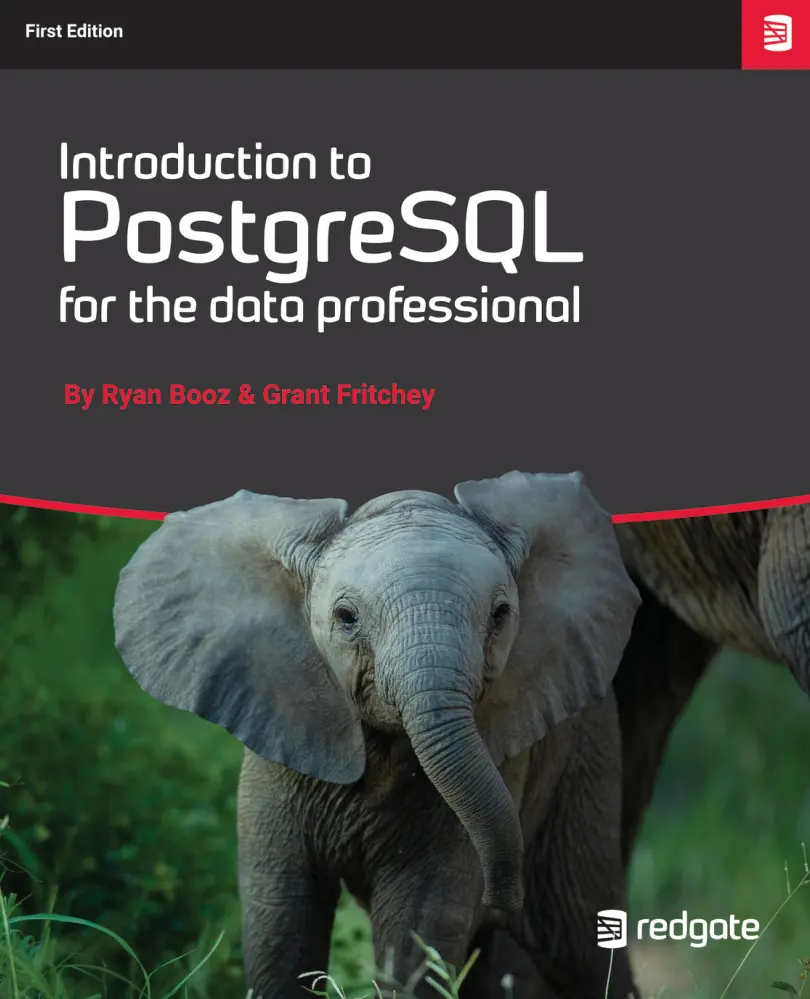
Introduction to PostgreSQL for the Data Practitioner Book Summary & Review
Quick Summary
A practical tech manual guiding data analysts and scientists through the advanced architectural features and query systems of PostgreSQL.
Book Topic and Premise
Why does a carefully crafted data pipeline suddenly crawl to a halt when confronted with millions of real-time rows? In Introduction to PostgreSQL for the Data Practitioner, developer advocate Ryan Booz answers this foundational scaling dilemma by offering an insider’s look at the open-source Postgres database engine. This text is explicitly written for data scientists who need to move beyond simple queries and master backend database architecture.
Working with the code blocks in this clean PDF version lets engineers learn query optimization directly on their local machines. Booz avoids generic database theory, choosing instead to explain the actual storage mechanics behind MVCC (Multi-Version Concurrency Control) and index lookups. The guide shows you exactly how to read a query planner to eliminate slow database scans.
Throughout these technical chapters, readers explore complex analytical window functions, time-series partitioning, and the powerful deployment of semi-structured JSONB columns. Reading this manual helps teams design databases that stay incredibly fast under heavy data analysis workloads. It stands as an essential technical narrative on efficiency, changing how data professionals interact with relational storage systems.
Detailed Plot & Summary
Ryan Booz bypasses basic SQL tutorials to focus explicitly on what data practitioners need to optimize large-scale data systems. The book dives deep into the PostgreSQL engine, explaining index structures, query execution plans, and memory allocation. Booz walks readers through window functions, JSONB semi-structured storage, and geographic data handling using PostGIS. Advanced chapters cover data partitioning, replication, and performance tuning for heavy analytical workloads.
✍️ Editor’s Note: An elite technical guide that transforms standard database users into performance-tuning experts capable of running intensive data pipelines.
Critical Review and Analysis
The focus on data analysis workflows rather than just app development makes this book highly unique. The explanation of the ‘EXPLAIN ANALYZE’ command is worth the price alone. However, absolute beginners who don’t know basic SELECT syntax will find the learning curve too steep.
Main Themes & Motifs
- Query Performance Tuning
- Indexing Strategies
- Relational Data Models
- JSONB Optimization
Who Should Read This Book?
Data analysts, data engineers, backend developers, and data science students running into database scaling limitations.
Why You Should Read It
It focuses purely on analytical data optimization, showing you how to wring every ounce of performance out of a PostgreSQL deployment.
Key Takeaways & What You Will Learn
How to write highly efficient window functions, manage partitions for time-series datasets, and troubleshoot slow analytical queries using execution plans.
Technical & Bibliographic Details
| 📖 Title: | Introduction to PostgreSQL for the Data Practitioner |
| 🔍 Original Title: | Introduction to PostgreSQL for the Data Practitioner |
| ✍️ Author: | Ryan Booz |
| 🗣️ Translator: | None |
| 🏢 Publisher: | Packt Publishing |
| 📅 Publication Year: | 2023 |
| ⏳ First Published: | 2023 |
| 🔢 ISBN: | 9781804616222 |
| 📦 Amazon ASIN: | B0BX9N96Y6 |
| 📄 Total Pages: | 348 |
| 📁 Category: | Computer Science, Databases, Data Analysis, Software Engineering, English |
| 🌍 Language: | English |
| ⭐ Goodreads Rating: | 4.40 / 5.0 (12 votes) |
| ⏱️ Reading Time: | 7 hours |
| 📊 Difficulty Level: | High |
| ⛓️ Book Series: | None (Vol. None) |
| 🏆 Awards: | Highly Rated Technical Release by the Postgres Developer Community |
| 📚 Similar Books: | Designing Data-Intensive Applications, High Performance PostgreSQL, Learning SQL |
⚠️ Content Warnings: None
Frequently Asked Questions (FAQ)
❓ Does Ryan Booz cover cloud implementations like AWS RDS Postgres?
The core concepts apply universally to cloud environments, though the text prioritizes the underlying open-source PostgreSQL engine mechanics.
❓ Is this a suitable guide for a total SQL beginner?
No, this manual assumes you already understand basic CRUD operations and database tables, focusing instead on optimization and advanced engineering.
❓ What unique data features are explored in this text?
The book places massive emphasis on window functions, relational partitioning, time-series datasets, and semi-structured JSONB storage paradigms.
❓ Are database administration topics covered?
Only as they relate to performance optimization, memory configurations, and indexing strategies for data practitioners, rather than full network security administration.
❓ What command line tools are utilized in the manual?
The text heavily utilizes standard psql terminal commands and execution analyzers like EXPLAIN and EXPLAIN ANALYZE.
❓ Does it touch upon spatial data types?
Yes, it includes a brief, valuable introduction to geographic data structures and how extensions like PostGIS expand database capabilities.
📚 Recommended Category: Explore more in our Computer Science hub.