Follow our Telegram channel to get notified instantly whenever new books are published.

Investing Explained PDF – Matthew Partridge
Total Downloads:
6
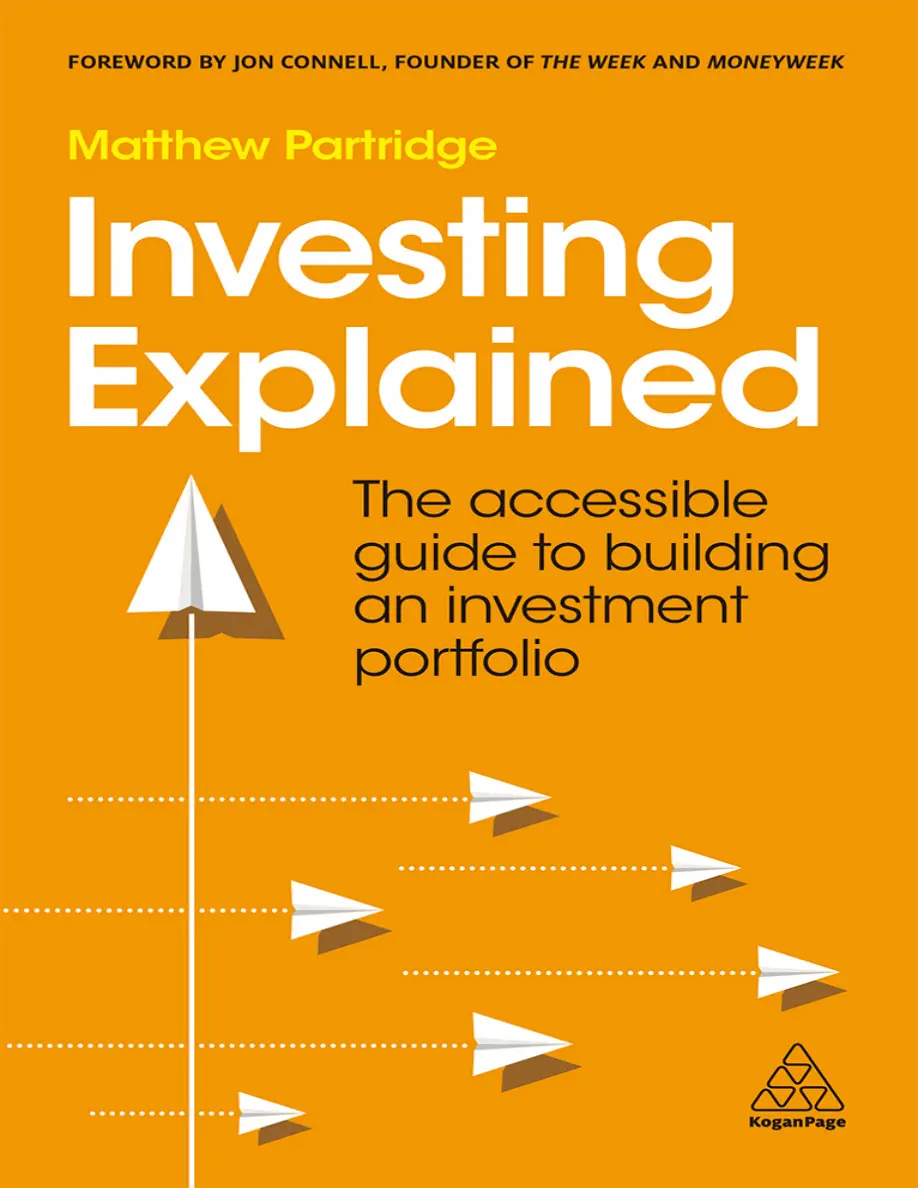
Investing Explained Book Summary & Review
Quick Summary
A clean, jargon-free guide that walks readers through the mechanics of capital markets, compound interest, asset allocation, and stock valuation.
Book Topic and Premise
Why do standard bank accounts fail to beat inflation, and how can everyday citizens safely build wealth in volatile modern markets? In Investing Explained, prominent financial writer Matthew Partridge demystifies the inner workings of corporate equities and bond markets, transforming abstract economic theories into a highly practical guide for wealth preservation. The text is designed for individuals who want to take control of their financial future.
Reading this accessible PDF version helps readers understand corporate financial statements and dividend metrics without feeling overwhelmed by complex math. Partridge focuses heavily on the discipline of value investing, explaining how to spot companies whose stock prices are trading below their actual intrinsic worth. The text provides a shield against speculative market bubbles.
Throughout the pages, the power of compound growth and diversified asset allocation is clearly illustrated. The book provides a step-by-step methodology for building a balanced portfolio that matches your unique risk tolerance. It functions as an empowering financial novel, turning intimidating market mechanics into clear, actionable steps for building long-term wealth.
Detailed Plot & Summary
Financial journalist Matthew Partridge breaks down the complex machinery of global stock markets into actionable concepts. The guide strips away Wall Street hyperbole to evaluate core investment instruments, from individual equities and bonds to index trackers and mutual funds. Partridge dedicates significant chapters to analyzing corporate balance sheets, interpreting price-to-earnings ratios, and understanding how central bank interest rates drive market volatility.
✍️ Editor’s Note: A foundational text for anyone looking to manage their own portfolio without relying blindly on expensive financial advisors.
Critical Review and Analysis
The clear writing style makes financial analysis remarkably approachable for retail investors. The historical summaries of past market crashes provide wonderful context. However, the book focuses heavily on the UK London Stock Exchange (LSE) framework, meaning international investors might find some tax-wrapper discussions less applicable.
Main Themes & Motifs
- Compound Growth
- Risk Mitigation
- Market Valuation
- Financial Independence
Who Should Read This Book?
Beginner retail investors, young professionals looking to build savings, and anyone wanting to understand corporate equity evaluation.
Why You Should Read It
It replaces risky get-rich-quick advice with time-tested, historically proven asset growth strategies.
Key Takeaways & What You Will Learn
How to read basic corporate balance sheets, use price ratios to evaluate stocks, and construct a low-cost, diversified index fund portfolio.
Technical & Bibliographic Details
| 📖 Title: | Investing Explained |
| 🔍 Original Title: | Investing Explained: London Stock Exchange Shareholder Guide |
| ✍️ Author: | Matthew Partridge |
| 🗣️ Translator: | None |
| 🏢 Publisher: | Kogan Page |
| 📅 Publication Year: | 2019 |
| ⏳ First Published: | 2019 |
| 🔢 ISBN: | 9780749484804 |
| 📦 Amazon ASIN: | B07P7R8Y5V |
| 📄 Total Pages: | 240 |
| 📁 Category: | Finance, Business, Investing, Economics, English |
| 🌍 Language: | English |
| ⭐ Goodreads Rating: | 4.08 / 5.0 (38 votes) |
| ⏱️ Reading Time: | 5 hours |
| 📊 Difficulty Level: | Medium |
| ⛓️ Book Series: | None (Vol. None) |
| 🏆 Awards: | Shortlisted for the Financial Book of the Year Awards |
| 📚 Similar Books: | The Intelligent Investor, The Little Book of Common Sense Investing |
| ✍️ Other Books by Author: | The Great Money Myths |
⚠️ Content Warnings: Financial risk discussions
Frequently Asked Questions (FAQ)
❓ Does Partridge promote speculative trading or day trading?
No, the book explicitly warns against high-risk short-term speculation, focusing purely on long-term, passive value investing principles.
❓ Is this finance guide overly focused on the UK market?
While it utilizes London Stock Exchange examples, the core asset allocation and equity evaluation laws apply universally to global markets like the NYSE.
❓ What is the key takeaway regarding index funds?
The book highlights low-fee index tracking funds as the most reliable, efficient way for everyday retail investors to match broader market growth.
❓ Are there complicated mathematical formulas to calculate?
No, the book relies on basic arithmetic and simple ratios like P/E and dividend yields, making it accessible to non-mathematicians.
❓ Does it discuss modern digital cryptocurrencies?
It focuses on traditional cash-producing assets like corporate stocks, bonds, and real estate, treating crypto as a speculative vehicle rather than an investment baseline.
❓ When was Matthew Partridge’s guide released?
It was published by Kogan Page in 2019 and continues to serve as an excellent blueprint for modern asset building.
📚 Recommended Category: Explore more in our Finance hub.